

IN THIS ARTICLE
How Emotional Eating Affects Your Snacking Habits
Introduction
Emotional eating is an often-overlooked issue. It is a phenomenon where people often feel the need to eat even if they don't feel hungry. Emotional eating is an unhealthy coping mechanism to say the least, since it can also escalate when the trigger may remain un-resolved for longer periods of time.
Food is meant to energise us, beyond this if we use food to cope with emotions like stress, boredom, or a particular state of mind – it may be a cause for concern.
No need to be alarmed though- as it is just as common as it is easily rectified. Once you're aware of it, you can easily cope with it. All it takes is baby steps.
What Is Emotional Eating?
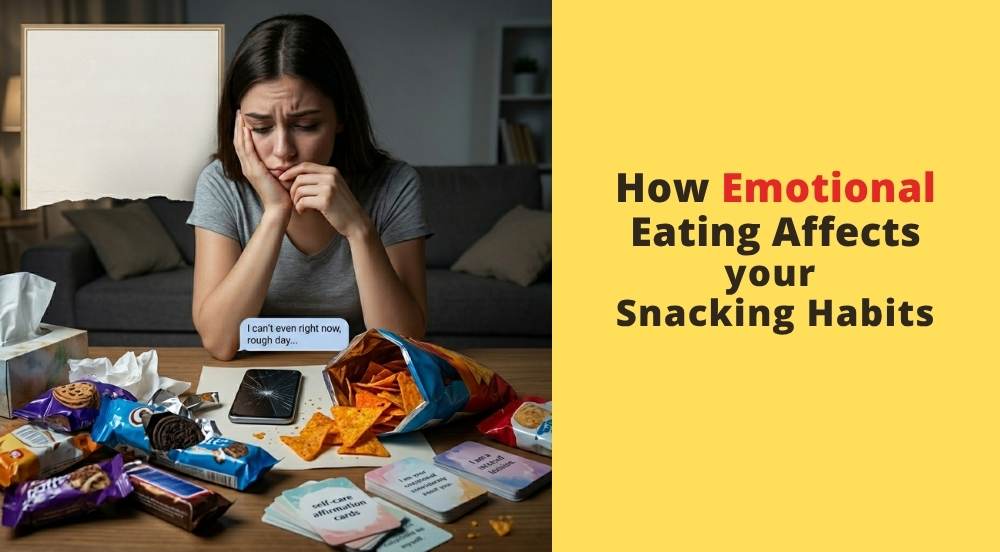
Emotional eating is a response. A response to uncomfortable feelings that we avoid feeling. It is when one tends to eat in response to their feelings rather than their hunger. Emotional eating can result from both negative and positive emotions.
The triggers that may cause emotional eating may include:
- Stress and pressure from work and daily life
- Lack of engagement and boredom
- Eating due to habit while engaging in an activity like watching something
- Eating as a reward
To understand how specific cravings work, refer to: crunchy snack cravings
Emotional Hunger vs Physical Hunger
When you are hungry, take a minute to assess whether its emotional hunger or physical hunger.
It is emotional hunger, if it:
- Appears suddenly
- Has a craving for a particular type of food
- Is often associated with a particular state or situation
- Does not get satisfied even after eating
It is physical hunger, if it:
- Appears gradually
- Can get satisfied with other types of food too
- Is a message from the body
- Stops as soon as one is full
How Emotional Eating Affects Snacking Habits
Emotional eating may result in unhealthy responses that become hard to manage over time.
Some of the effects of emotional eating include:
- Tendency to snack between meals even when not hungry
- Tendency to prefer certain kinds of food, such as crunchy or processed snacks
- Tendency to overeat during certain times, such as late in the evening
If overeating is a concern, you can also refer to: How to Avoid Overeating After Religious Fasting
How to Manage Emotional Eating
Identify Your Triggers
Pay attention to the timing of your desire to snack and what makes you want to do it. Yes, knowing when you are triggered is the first step.
Pause Before Eating
Take a moment to assess if you are actually hungry or if you are acting on a feeling. De-escalate it. Mentally figure out a healthy thought to take away the trigger’s power.
Replace the Habit
Try taking a break or going for a walk instead of eating. It can even be a sip of water or a stretch and a push-up. Remember, baby steps.
Healthier Snacking Alternatives
If the urge for a snack still exists, which is common, easy and manageable, pick up healthier snacks. It is possible to manage the consequences of the snacking through the following:
- Roasted makhana, which gives a sense of satisfaction
- Nuts and seeds, which are nutritious and assist in portion control
- Baked snacks instead of fried snacks
- Simple mixes of nuts, which are easily consumed without the risk of overeating
If you are also focusing on reducing oil intake, refer to: low oil snacks
Common Mistakes to Avoid
Some of the habits listed below cause emotional eating more often:
- Disregarding one’s triggers and continuing with the same routine
- Keeping processed foods handy
- Munching while distracted, e.g., watching TV or a screen device
- Striving to avoid snacks, which can cause binge eating later
Why Awareness Matters
Emotional eating is a very common behaviour amongst our newer generations, as stresses increase and our connection from Earth, nature, people, even our own breathing decreases.
It is quite important to become aware of it and take baby steps to bringing it back in balance.
Once you become aware of your behaviour, you will have a choice to do something about it. This will prevent you from reacting by overconsuming food.
Conclusion
Emotional eating means masking your uncomfortable emotions with food. Not only is it bad as it doesn’t help us release those emotions – just as simple as feeling them. But it is also bad in terms of the fact that we tend snack on unhealthy foods while emotional eating.
By becoming aware of your emotional eating triggers, your hunger patterns, and your snack choices, you can better control emotional eating.
Small changes in awareness and habits lead to better and more balanced eating.
And of course, feel your emotions, that’s all that is needed.
FAQs
What is emotional eating?
Emotional eating is when you eat in response to feelings like stress, boredom, or comfort instead of physical hunger.
How do I know if I am emotionally eating?
If you feel sudden cravings, eat without hunger, or do not feel satisfied after eating, it may be emotional eating.
How can I stop emotional snacking?
Identifying triggers, pausing before eating, and replacing habits with other activities can help manage it.
Are certain foods linked to emotional eating?
Yes, people often prefer crunchy, sweet, or processed snacks during emotional eating.
Can emotional eating be controlled?
Yes, with awareness and small habit changes, it can be managed effectively.


