

IN THIS ARTICLE
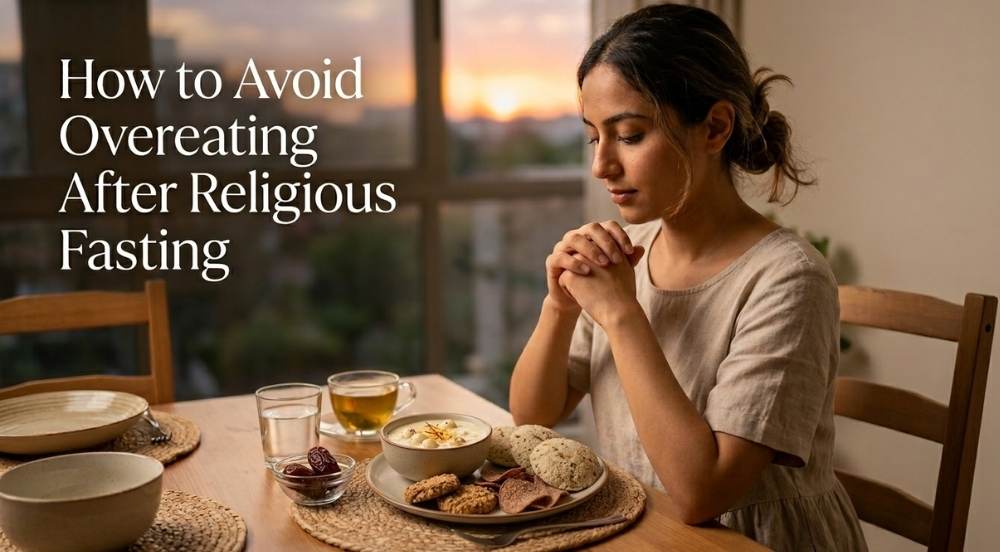
How to Avoid Overeating After Religious Fasting
Introduction
Fasting season is upon us. And after fasting for such long intervals, it is only natural to feel extremely hungry or crave your favourite snacks. This, in turn, may lead to overeating, which is when one ends up eating more than they should. The result of overeating is heaviness, discomfort and lack of energy – to say the least.
Hence, knowing how to control overeating when one is fasting is essential. This is both for one’s own comfort and to also ensure that we maintain a balanced diet. With very simple changes in one’s eating habits, we can easily manage our hunger.
Why Overeating Happens After Fasting
When your body does through fasting for long hours, it will send your mind strong hunger signals. If one fails to plan their meals adequately in such a case, it may result in your eating too much within a short period of time- once your fast breaks.
The common reasons for this are:
- Long intervals without food, causing extreme hunger
- Eating too fast without giving your body enough time to adjust
- Eating too much food after fasting, especially heavy fried foods
- Failing to control your food intake during meals
For better meal planning, refer to: Energy-Boosting Snacks for Long Fasting Days
What Happens When You Overeat After Fasting
Overeating does not only influence your stomach at the moment; but it may actually influence your energy and digestion as well.
These are the effects of overeating that one may notice:
- Sense of being heavy after eating
- Slow digestion of food, especially if the food consumed is rich or greasy
- Sudden drop of energy after an initial boost of energy
- Lack of interest in doing exercises
If you’re planning your Iftar meals, you can also refer to: Ramzan Evening Iftar Snack Ideas That Are Light & Nourishing
How to Control Hunger After Fasting
Start with Small Portions
The first best thing you can do is to start small. You may start with a light snack before going for a full meal, or better yet- taking smaller portions of your full meal. This will help your body adjust gradually.
Eat Slowly
It is very much recommended that one would eat their meals slowly and mindfully. Sometimes, it is observed that if meals are not consumed slowly, one ends up consuming quite a bit more than is actually required- before the body feels full.
Choose Light First Foods
It is important that you make sure to start with light foods such as nuts or fruits. Then you can proceed to other meals.
For lighter options, you can explore: summer healthy snacks
Best Snacks to Prevent Overeating
Our recommended healthy snack options that can help you manage hunger and binge eating are as follows:
- Dates and dry fruits, which can help you manage extreme hunger
- Roasted makhana, which can help you feel light and avoid binge eating
- Nuts and seeds, which can provide energy and help you manage fullness
- Fruit bowls, which can help you refresh your body – Natural Berries
- Small portions of protein-based snacks, which can help you manage fullness – Ragi Chips, Moong Dal Chips, Oats Chips, Soya Chips, Beetroot Chips, Banana Chips
If hydration is also important, refer to: snacks for hydration
Common Mistakes to Avoid
There are certain habits that aren’t completely healthy, which increase the possibility of overeating after fasting:
- Taking large meals as soon as the fasting period is over
- Taking heavy foods like fried foods as the first meal
- Missed snacking, followed by a heavy meal
- Not focusing on the quantity of meals
Why Balanced Eating Works Better
When you finally break your fast with some well-balanced and light foods, your body will respond in a better way. You will witness your hunger becoming so manageable, digestion improving many folds, and you will most definitely prevent yourself from the unpleasant feeling of overeating.
Having such a system of eating will make fasting more comfortable.
Conclusion
As we know, the tendency to overeat after fasting is quite a common scenario. However, it can easily be and controlled in a number of ways. These ways include- eating lighter snacks, taking smaller portions, staying hydrated and eating slowly. This way you can make a huge difference in your after fasting eating habit.
So, dear readers, we hope you enjoy for fasting season and post fasting meals, while taking care of your health and well-being.
FAQs
Why do I overeat after fasting?
Overeating happens due to extreme hunger after long gaps without food, combined with eating quickly or choosing heavy meals.
How can I control hunger after fasting?
Start with small portions, eat slowly, and choose light foods before having a full meal.
What should I eat first after fasting?
Light foods like fruits, nuts, or small snacks are ideal to begin with before moving to heavier meals.
Does eating fast cause overeating?
Yes, eating quickly can lead to consuming more food before your body signals that you are full.
Can snacks help prevent overeating?
Yes, having small, balanced snacks helps control hunger and reduces the chances of binge eating.


